
Post-industrial plastic scrap (e.g., polypropylene), rather than being waste, is a valuable raw material resource that most producers continue to pay to dispose of. The businesses that are ahead of the game today treat their PP trim, runners, and off-cuts as a raw material that has a market price instead of a liability that has a disposal price.
Post-industrial PP is an entirely different class of material
Speaking about plastic recycling, most people tend to imagine a difficult feedstock – a mixture of materials moving through the sorting shed that is hard to forget. Plastic recycling is often contaminated and inconsistent, with the consumer stream containing non-recyclable materials or imperfectly sorted recyclables.
None of these statements describes post-industrial PP scrap.
This type of polypropylene (or any other thermoplastic) that is created in the course of the manufacturing process – trimming from the edges of an extrusion run or injection molding, sprue and runners from injection-molding process, material that cannot be sold due to label placement errors – is created as a known-grade, from a known manufacturing process, with no food residues or mixed-polymer contamination. This is what your process generates while creating virgin resin products, and not the post-consumer leftovers. This is valuable because it is clean and consistent. And the inability of the recycling industry to quickly distinguish between post-consumer and post-industrial PP scrap does not prevent manufacturers from making that distinction.
The grade of PP created within the industrial process is known beforehand, while it is in the hopper. The grade of PP in the waste container at the end of the manufacturing process is known because it is created in direct connection with the manufactured product. The grade of PP in the perfect offcuts warehouse in the manufacturing plant is known. The grade of PP in the gaylord box of clean offcuts to be transported to a recycler is known before the forklift picks it up.
And this, in general, is what makes it valuable. A recycler is able to take a load of industrial PP and know what it is beforehand. The slurry from the wash line is not a mixture of who-knows-what, it is the clearly identified, known-quality polypropylene. This kind of predictability directly translates into higher-quality output pellet, and the need for an upfront investment of time for testing and assessment is not that high with such feedstock.
The economics are turning against virgin resins
New polypropylene is a byproduct of the petrochemical industry. It will always remain highly sensitive to oil market dynamics, operational disruptions, and geopolitical factors. Manufacturers that are aware of this should understand that volatility of virgin PP prices is here to stay and the price curve will keep rising.
Recycled PP competes with virgin resin in price as well as – for the vast majority of manufacturing applications – utility. However, sourcing recycled PP gives additional protection against volatile prices that purchasing more virgin resin will never provide. The price advantage of the recycled PP quickly increases as prices for virgin material increase.
Landfill taxes and gate fees are constantly increasing, making the “dispose of it and move on” approach increasingly costly. Many manufacturing decision-makers would be shocked to learn how much money they are spending every year to have PP scrap disposed of.
What commercial polypropylene recycling entails
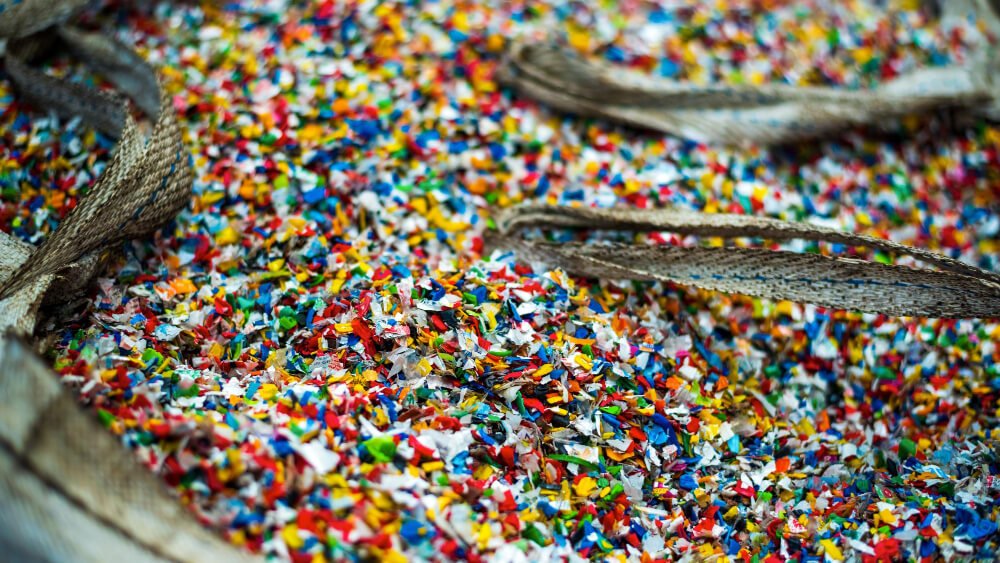
The process chain for clean industrial PP is much easier than most manufacturers think. First of all, the material arrives already sorted by grade – this has been done during its manufacture and is designed exactly for it. Then it is shredded to an even particle size, if necessary washed and dried, and fed into the extruder. At the other end of the extruder comes repelletized rPP resin, graded by the melt flow index (MFI) to determine its applicability for downstream use.
MFI is a critical technical parameter. It defines how the material behaves as it flows under the heat conditions of molding and extrusion. Have your MFI tested and reported to a recycler – and you give that recycler an opportunity to provide customers with all information needed to specify the recycled content in real production – to transform rPP from an abstract sustainability concept into a real manufacturing input.
For manufacturers that have moved from a traditional waste contractor to something more sophisticated, cooperation with specialists that act as an environmental-friendly recycling solution for industrial PP gives the necessary processing capacity and technical grading that makes closed loop operation possible.
Toll recycling and buy-back programs are changing the cost model
Toll recycling is a structure where a manufacturer delivers its scrap and receives an agreed upon volume of resin product in return. Then the manufacturer uses this recovered resin in its manufacturing process and decreases its purchase of virgin resin. In fact, the scrap has been “traded” for the product it would have been used to produce.
Buy-back is the same as a toll recycling scheme from the point of view of process, but instead of getting the resin product the manufacturer receives a monetary payment. Either way, the scrap stops being a cost center and turns into a raw material asset. For large-scale users of PP, the figures can be significant.
The chemical properties of polypropylene make the recycled material valuable
High chemical resistance and high melting temperature of polypropylene are what make it attractive for use in automotive parts, packaging, and consumer goods – and these characteristics are retained through the recycling process with clean industrial waste. However, the post-consumer applications are quite different; having been degraded through use and contaminated by the co-collection procedure, PP becomes too compromised to be used in most applications.
Cost-competitive and high-quality rPP is already being used in automotive interior parts, food contact packaging, and consumer goods. As its LCA is much better than that of virgin PP and as more and more regulations will price in these externalities, this trend will only grow stronger.
The use of recycled polypropylene reduces greenhouse gas emissions by 88% in comparison with the production of virgin PP from petrochemical feedstocks. For companies with ESG reporting obligations, this figure has a meaningful effect on the company’s scope 3 emissions.
Scrap with a market price needs a market strategy
To change the perspective on the PP scrap from a waste management viewpoint to a product viewpoint, a single practical step needs to be taken first: understanding what you produce, how much, and in what grades. Then you are able to enter business discussions with recycling experts about pricing, logistics, offtake agreements, instead of asking for disposal estimates. This is a completely different role for a procurement or operations department to play.