
Clear aligners are often discussed as the discreet alternative to braces. That is true, but it does not answer the question people with an overbite actually need answered: can they move my teeth in the way my bite needs?
Sometimes they can. Sometimes braces, elastics, or another approach make more sense. The useful starting point is not the brand name or how visible the treatment will be. It is understanding the bite problem itself and what has to move to correct it.
An overbite is not always the same orthodontic problem
An overbite describes how much the upper front teeth overlap the lower front teeth. But the reason for that overlap matters. In a dental overbite, the main issue is the position of the teeth. In a skeletal overbite, the relationship between the upper and lower jaws is part of the problem.
That difference changes the treatment plan. Dental and skeletal overbites require different kinds of correction, so two people who both say they have an overbite may not be suitable for the same approach.
It is also easy to confuse an overbite with an overjet. An overbite is mostly about vertical overlap; an overjet is when the upper front teeth sit noticeably farther forward. The terms sound similar, but they describe different tooth positions. A proper assessment should make that clear before anyone starts talking about trays or treatment time.
Orthodontic care is not simply about making teeth look straighter. It addresses problems involving the teeth, jaws, spacing, and bite. MedlinePlus describes orthodontia as care for abnormalities of the teeth and jaw, including bite problems. That is why a bite concern deserves more than a quick visual guess.
Clear aligners move teeth in small, planned stages
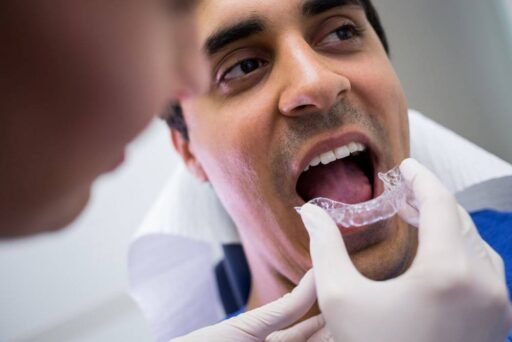
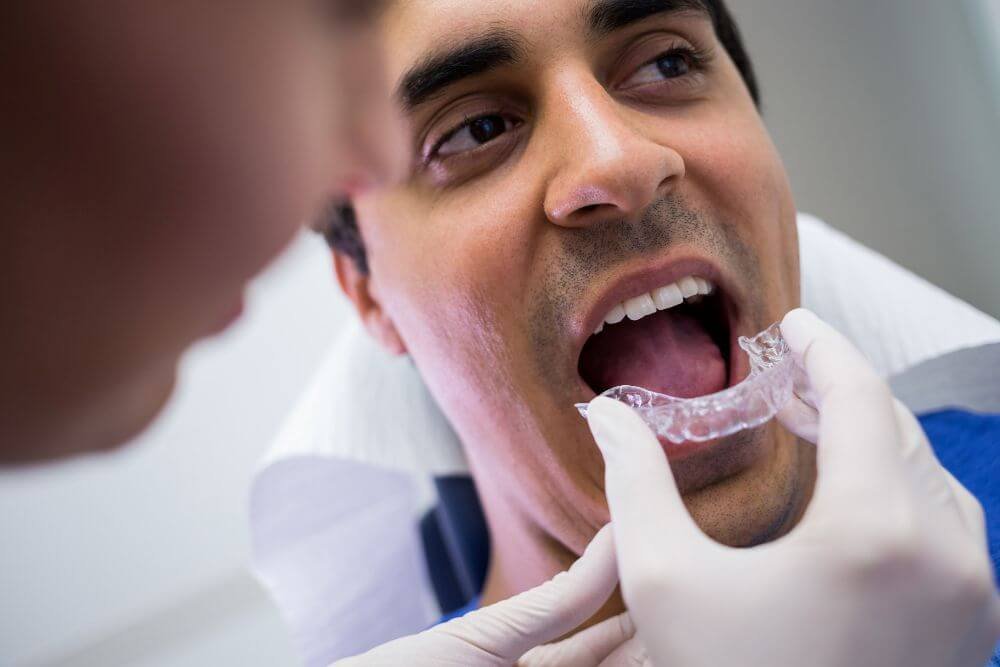
Clear aligners are custom trays that fit over the teeth. Each set applies gentle pressure, moving teeth a little at a time as the treatment plan progresses. The movements are deliberate, but they are still tooth movements, not a universal fix for every jaw relationship.
For the right case, that can make aligners a practical option for an overbite, underbite, crossbite, open bite, crowding, or spacing concern. The American Association of Orthodontists lists those among the conditions aligners may treat, while also noting that suitability depends on the individual case.
That last point is important. Can aligners treat overbites is not quite the same question as will aligners correct my overbite? A clinician needs to look at the teeth, bite pattern, gums, existing dental work, and the amount of movement required before giving a useful answer.
The daily routine is part of the treatment
Removable treatment has a clear advantage: you take aligners out to eat, drink, brush, and floss. It also creates a responsibility. The treatment only works as planned when the aligners are worn for the hours your provider recommends.
That can be easy to underestimate. Skipping wear time, losing trays, or repeatedly delaying a switch to the next set can affect how teeth track through the planned sequence. The issue is not whether someone is good or bad at treatment. It is whether a removable option fits their normal routine.
ReadMyBusiness notes that healthcare membership plans differ in their mix of preventive visits, virtual appointments, urgent consultations, and wellness support. The same practical question applies to aligners: how will progress be monitored, and what happens if teeth do not track as planned? A removable option is a good fit only when the person wearing it can follow the plan.
Some bite corrections need more than clear trays
Bite treatment can involve more than simply changing the position of the front teeth. In certain cases, small attachments bonded to the teeth give aligners something to grip. In others, elastics may help guide the bite while the teeth are moving.
Those additions are not a sign that the treatment has gone wrong. They are part of how a clinician creates the force and control a particular case needs. The key is knowing why they are being recommended and what part of the bite they are meant to address.
More complex cases can call for a different plan. The AAO notes that some cases are treated more predictably with braces, while severe deep-bite cases can require surgical orthodontics when the jaw relationship, not just the teeth, needs correction. The underlying cause, severity, and age of the patient all influence which option is appropriate.
That is not a reason to assume the worst. It is simply a reminder that clear aligners should be chosen after an assessment, not before one.
A useful consultation should answer practical questions
A good consultation should leave you with more than a before-and-after simulation. You should understand what is happening in your bite and what the proposed treatment can realistically change.
Ask questions such as:
- Is my overbite mainly dental, skeletal, or a combination of both?
- Which teeth need to move, and what role will attachments or elastics play?
- Would braces give the clinician more control in my case?
- Do crowns, implants, gum health, decay, or tooth wear affect the plan?
- How much daily wear is expected, and how will progress be monitored?
- What should I expect during treatment, at the end of treatment, and afterward?
The point is not to interrogate the clinician. It is to make sure the plan makes sense to you. In ReadMyBusiness’s look at clinical operations, vague callback instructions and missed follow-up can leave patients unsure of what to do next. Ask who handles a tray that will not fit, whether the office needs to see you before the next change, and what follow-up looks like when treatment finishes.
Braces and aligners are tools, not competing identities
Clear aligners are often framed as modern and braces as old-fashioned. That comparison does not help much. Both are orthodontic tools. Each can be the right answer depending on the movement, the bite, and the person receiving treatment.
Braces stay on the teeth, which can give a clinician consistent control for certain complex movements. Aligners are removable and less noticeable, which many adults appreciate. Neither feature automatically makes one better.
The most reliable plan is usually the one that matches the clinical problem and the patient’s real life. That might mean aligners with attachments and elastics. It might mean braces. It might involve a combination of methods. The right answer is specific, not generic.
A better decision starts with a clearer diagnosis
An overbite is worth understanding before it is worth treating. Once you know whether the issue is mostly tooth position, jaw relationship, or both, the conversation about clear aligners becomes much more useful.
Clear aligners can be an effective option for many bite concerns. They are not a promise, a shortcut, or a replacement for clinical judgment. A good result begins with a careful examination, an honest explanation of the options, and a treatment plan built around the bite, not the marketing.