

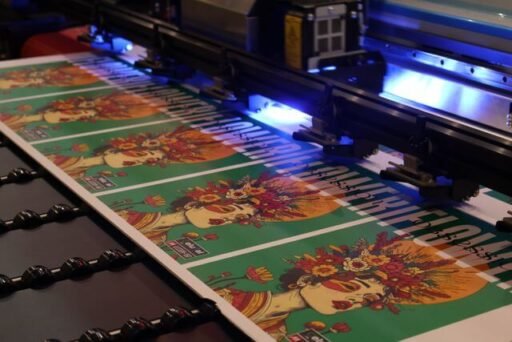
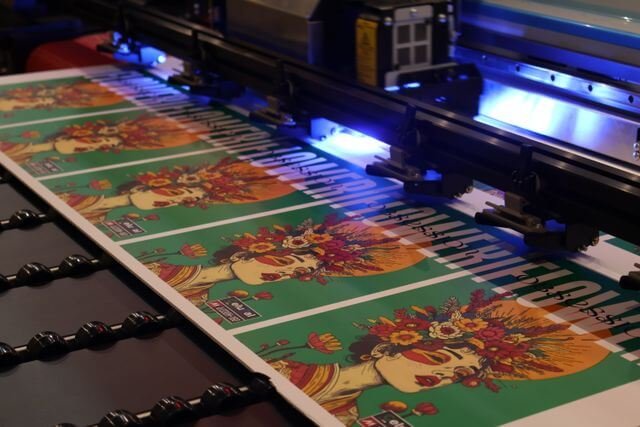

I watched a two-person sign shop in Ohio sign a five-year lease on a machine that was bigger than the jobs it was built for. Fourteen months later the printer was gone and so was about $19,000. That single decision, made over a single weekend, did more damage to the business than two slow winters combined.
That is the part of this industry nobody likes talking about. You can compare wide format printers on speed, resolution, and ink configuration all day long, and still pick the wrong one, because the real question was never technical. It is whether the machine pays its own bill before it dies. Every quote you look at is a cash flow document wearing a spec sheet as a disguise.
So before you compare a 64 inch roll-to-roll against a flatbed, run the honest number: what does this thing need to produce every month just to break even, and do you already have that work under contract? If you can’t answer that with real job tickets, you’re not shopping. You’re gambling. Here is how to do it properly.
The break-even math nobody runs before signing
Take the monthly payment, then add ink, media, maintenance, electricity, and the labor hours tied to running it. That’s your true monthly cost. Now divide by your average margin per square foot. The result is the square footage you must sell every single month just to stand still.
Most buyers skip this step because the payment looks small on its own. Six hundred a month feels manageable until you realize that number is closer to $1,800 once consumables and labor land on the books. If you’re moving 4,000 square feet a month today, the math gets easy. If you’re moving 900, the machine is a second rent payment with a printhead attached.
What does an idle printer actually cost you?
More than you’d think, and the damage isn’t only financial. An underused wide format machine sits there, and every quiet Tuesday you look at it and wonder why you bought it. Meanwhile, the ink ages, the maintenance tank fills, and the warranty clock runs whether you print or not.
There’s a psychological tax too. A machine that isn’t earning makes you take jobs you shouldn’t take, at prices you shouldn’t quote, just to keep it busy. I’ve seen shops shave margins by 20% chasing square footage to justify equipment they never needed. That’s backwards.
So what’s the move? Size the machine to the work you can point at, not the work you hope to win. I’d rather buy a 54 inch printer that runs six days a week than a 126 inch printer that runs twice a month. Utilization beats capability every time, and it isn’t close.
Three buyers, three different right answers
There’s no universal best printer, only a best fit. Here’s how I’d think about the three most common situations.
- The sign shop scaling up: buy for your busiest recurring job, not your biggest one-off. Recurring volume pays the lease.
- The in-house print department: total cost means something different to you. You already pay staff, so the printer replaces a vendor invoice rather than generating new revenue, and that math favors reliability over speed.
- The new entrepreneur: lease or buy used, keep the commitment short, and prove the demand before you commit to a four-year term on anything.
Notice that none of these hinge on the spec sheet. They hinge on the cash cycle.
A quick reality check before you sign
Run these five questions past your own numbers. If you stumble on more than one, wait a quarter.
- Can you name the three jobs that will run on this machine in month one?
- What’s your margin per square foot after ink and media, honestly calculated?
- How many square feet a month does it take to break even, and do you sell that today?
- What happens to your cash if it runs at half capacity for six months?
- Does a smaller or used machine cover 90% of your work for 40% of the cost?
That last question kills more deals than any other, and it should. The used market and the smaller-format market exist for a reason. For plenty of businesses, a workhorse that covers the common jobs beats a flagship that covers everything and gets paid for none of it.
The broader business lending picture is worth studying too, since equipment finance usually rides on the same credit and cash flow standards as any other loan. According to baseline guidance from the Small Business Administration, lenders look hard at existing cash flow before approving business financing, which is exactly why your utilization case has to be solid before you walk into a dealer. Bring job tickets, not enthusiasm.
The utilization-first framework
I call this the U before C rule, and it’s saved me from at least two bad purchases. Utilization before capability. You prove the demand first, then you buy the machine that serves it. Not the reverse.
Here’s how it plays out in practice. Say you run a small commercial print operation doing vehicle wraps and window graphics. You’re turning away jobs because your current machine is 54 inches and the work needs 60. Do you jump to a 126 inch flatbed? No. You move up one size, capture the turned-away jobs, run it hard for a year, and then decide whether the flatbed earns its place. That’s a $30,000 decision instead of a $120,000 one, and it’s reversible.
Equipment is not a status symbol. It’s a tool that either produces margin or consumes it, and the size of the tool should track the size of the demand. If you want to see where the demand sits broadly, the Bureau of Labor Statistics tracks employment and output across printing and related support activities, and the trend line has favored smaller, more specialized operations for years. Specialization is where the margin lives now.
Where the money actually comes back
The payback isn’t in the printer. It’s in what the printer lets you stop outsourcing, stop turning down, or stop losing to a competitor with a faster turnaround. For an in-house department, the win is a vendor invoice that disappears. For a sign shop, the win is a job you can now take without a phone call to a trade partner who takes a cut. That’s why the buy decision belongs in your cash flow model, not your wish list. The printer is just the shape the investment takes. The investment itself is your capacity to say yes to work you’re currently declining, and that’s what you’re really paying for.
One more thing on timing. Financing terms and equipment availability shift with the broader economy, and federal procurement and small business programs often move with them. The General Services Administration publishes schedules and acquisition guidance that show how much public purchasing behavior depends on total cost of ownership rather than sticker price, and that’s the same lens a smart private buyer should use. Sticker price is the least interesting number in the deal.
Sizing the machine to the business, not the brochure
If you take nothing else from this, take the sequence. Prove the work, calculate the break-even square footage, and only then pick the printer that fits. Any machine that passes those two gates is a good machine, regardless of what the spec sheet says. Any machine that fails them is a liability, no matter how impressive it looks on the showroom floor.
So ask yourself one honest question before you sign anything: if this printer ran at half capacity for six months, would your business survive it? If the answer is no, you’ve found your answer. Start smaller, prove the demand, and let the machine earn the right to be bigger.


