

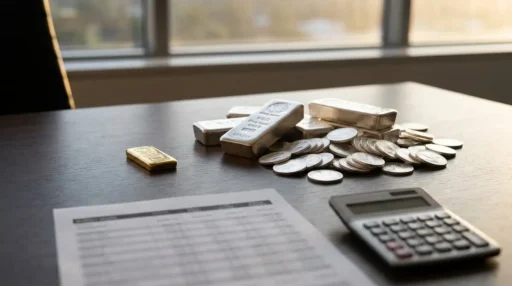
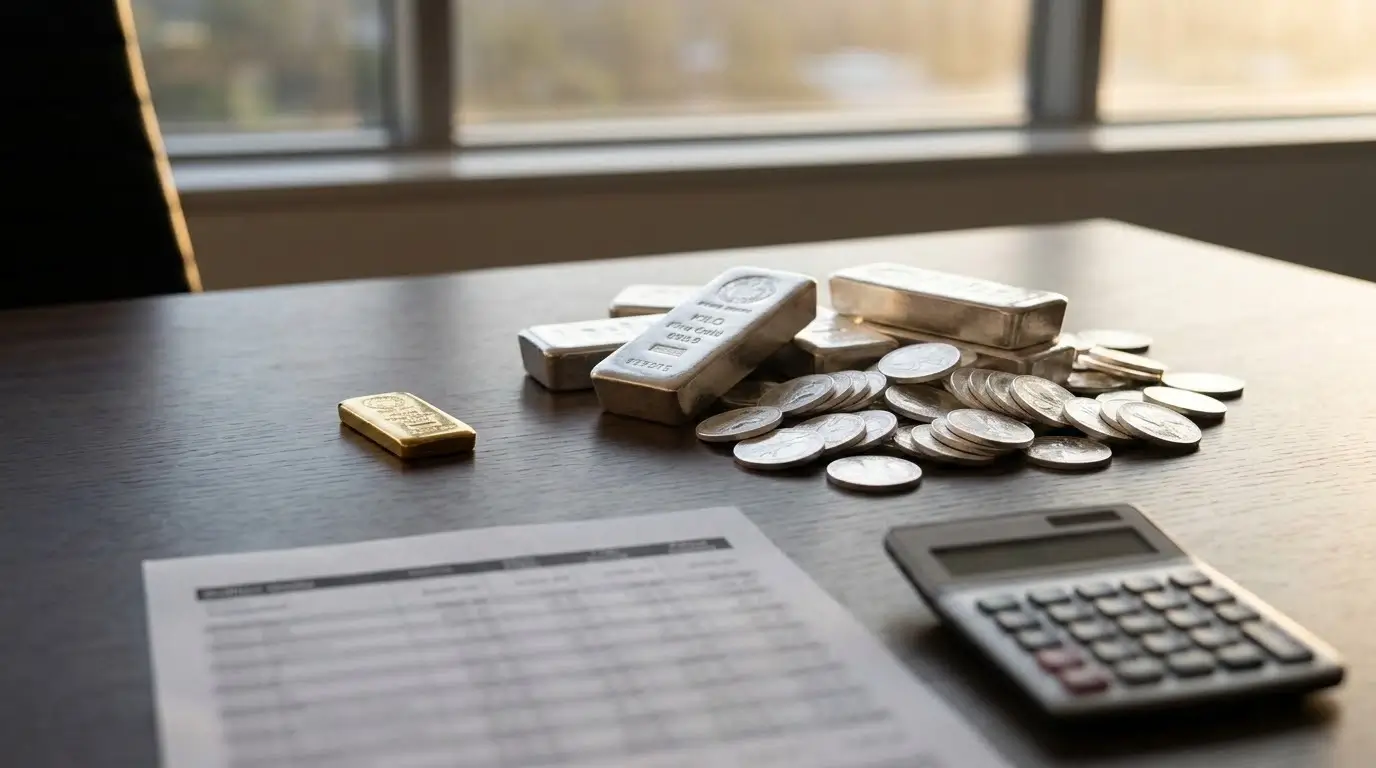

Silver looks cheap on a quote sheet. The ounce price is lower, so you get more metal for the same money. It feels like an easier place to start.
Then you add the premium, the freight, the space it needs, and the spread when you sell. That is usually when the cheap metal stops looking cheap.
This misunderstanding occurs frequently. People often compare spot prices directly, but the true cost of ownership requires a different calculation.
Spot Is Only the Starting Number
The published spot price is a wholesale reference. It is not what you pay over the counter.
Physical bars and coins still have to be refined, struck or cast, packed, insured, shipped, and held in stock. Someone in Australia has to sit with that metal before you can buy it.
Those steps cost real money. They do not shrink just because silver is worth less per ounce than gold.
On a one ounce gold bar, fabrication and handling are a small slice of the ticket. On a one ounce silver coin, the same kind of work is a much larger slice.
That is why common gold bars often sit only a few percent over spot. Standard silver products can sit several percent higher. Small coins sit higher again.
You pay that gap on the way in. You also live with it while you hold the metal, because your cost base includes the premium.
Why Silver Premiums Run Higher
Minting a coin costs roughly the same whether the blank is gold or silver. Freight is charged by weight and volume, not by how precious the contents feel.
A dealer still has to fund stock, cover price swings, and keep a spread wide enough to buy the piece back.
Gold hides those costs. Silver cannot.
That is why kilo silver bars usually look better value than a pile of one ounce coins. You spread the same manufacturing and handling bill over more metal.
Coins are easier to sell in small lots. Bars are cheaper to own. Most people need a mix.
If you want the comparison done properly, sit down with Brisbane bullion dealers and ask for two quotes on the same dollar amount. One in common gold bars. One in common silver bars. Premiums included.
The silver quote will almost always show a fatter percentage over spot. Nobody is padding the number for sport. Fixed costs just land harder on cheaper metal.
Australian supply does not help. We are a long way from the big wholesale pools, and silver is bulky to land in volume. Local premiums move around with stock. When cabinets are thin, the extra you pay on silver tends to jump first.
Storage Costs Follow Space
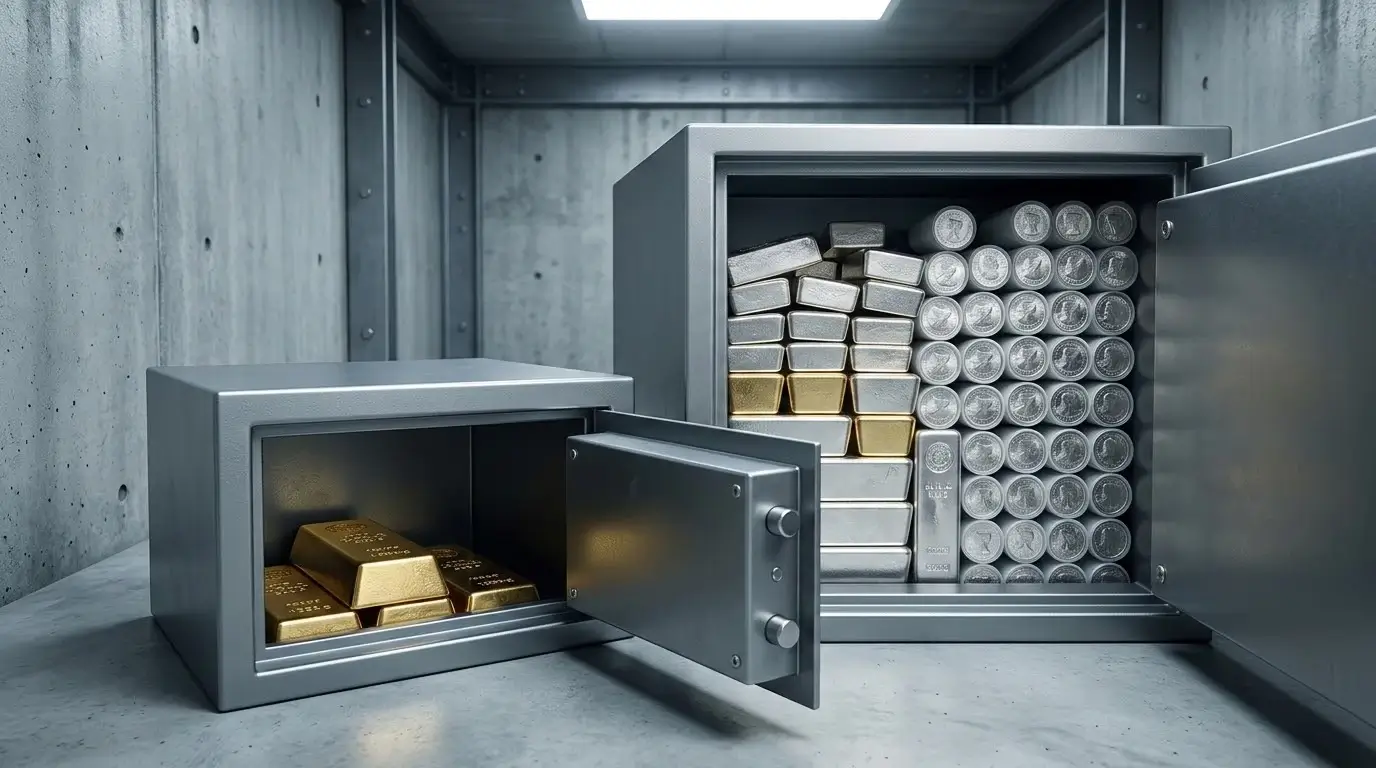
Gold is dense. A meaningful holding fits in a small safe or a small vault box.
Silver is lighter per cubic centimetre, and it is worth far less per kilogram. The same $50,000 in silver occupies a lot more room than the same $50,000 in gold.
Vaults and private boxes are often priced by size, not by metal type.
Fill a small box with gold and the annual fee is a rounding error against the holding. Fill that same box with silver and the fee is a real percentage of what you own.
In Australia, a small box can run to a few hundred dollars a year before you even talk about insurance.
Insurance follows a similar pattern. Cover based on declared value can look modest on gold. Cover based on weight, handling, and the number of pieces gets messy with silver, especially if you keep adding tubes and bars.
Home storage is not free either. A proper safe, bolting, and the extra bulk all add up. Silver also tarnishes in a damp cupboard. That does not wreck bullion value, but it is a nuisance when you go to sell.
This is the part of silver bullion storage that people skip on the way in. They budget the purchase. They do not budget the cubic metres.
The Buy-Back Spread
Ownership cost includes the exit.
Dealers generally buy gold back at a tighter discount to spot. It is easier to place and cheaper to hold. Silver often comes back with a wider gap, particularly in mixed coins, odd weights, or anything that needs extra sorting.
You can reduce that. Stick to recognised bars and coins. Keep original packaging if you have it. Sell in sizes the counter actually wants.
None of that removes the spread. It just stops you making it worse.
If you need cash in a hurry, gold is usually the cleaner sale. Silver still sells. It just takes more pieces, more weighing, and more time at the scale.
Tax Still Applies to Both
Investment-grade gold and silver can both be GST-free in Australia if they meet the precious metal tests.
Gold generally needs 99.5% purity in investment form. Silver generally needs 99.9%, in a bar, wafer or coin that still trades as metal rather than as an object. Jewellery and novelty pieces do not get that treatment.
So GST is not the simple gold-is-free, silver-is-taxed story you sometimes hear.
The bigger issue is capital gains. If you buy bullion as an investment and sell it for more than your cost base, CGT usually applies.
Hold for at least 12 months as an individual and the 50% discount may be available under current rules. Keep invoices. Premiums, dealer fees, and some holding costs can form part of the cost base.
Guesswork helps the ATO, not you. That paperwork is fiddlier with silver, because you tend to buy more items for the same money.
Buy Silver Efficiently
Silver still has a job. It is easier to start in smaller amounts, it has industrial demand, and some people simply want a larger physical holding they can see.
Fair enough. Just do not pretend the ounce price is the whole deal.
If you are going to hold it, favour larger recognised bars for the core. Keep a smaller slice in coins if you want flexibility. Be honest about where it will live.
A holding that already strains a home safe should be in a vault, or it should be smaller.
Work out the annual cost as a percentage of the metal, not as a flat dollar figure that looks harmless. If that percentage starts to eat the point of owning it, you are in the wrong size or the wrong metal.
Gold is expensive to buy and cheap to park. Silver is the other way around. Once you price it that way, the quote sheet makes a lot more sense.


