


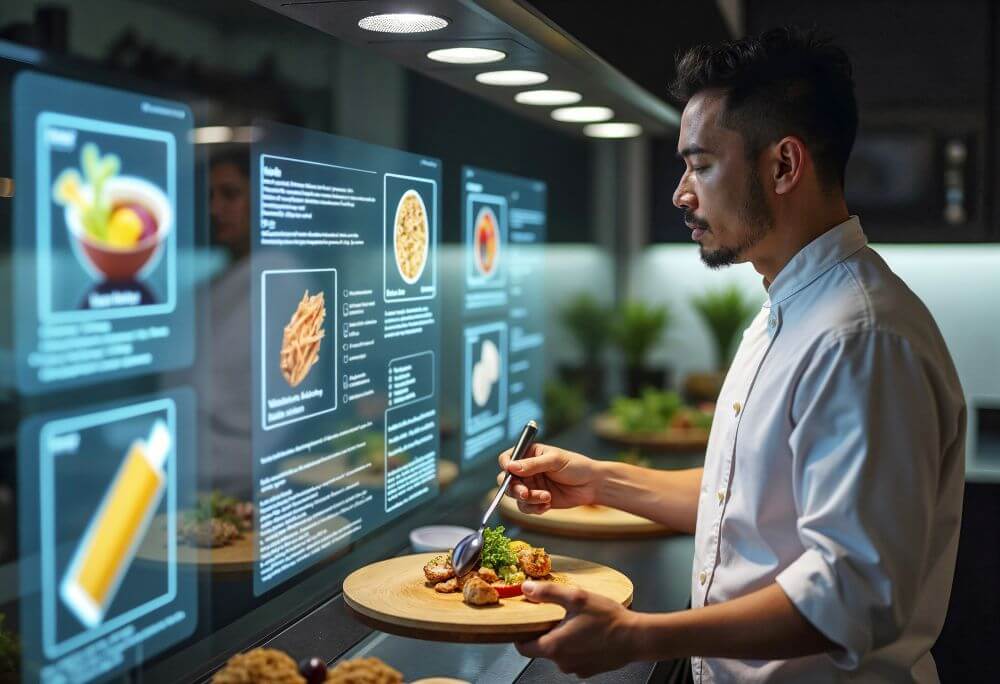

Running a food and beverage business today is a constant balancing act. Inventory runs out too soon—or sits too long. Staff schedules don’t always match customer demand. Marketing takes hours, and results can feel hit or miss.
Now there’s a new tool quietly changing how operators handle these daily challenges: AI.
Not the buzzword version. The practical one.
From predicting what dishes will sell tomorrow to helping you decide how many staff to schedule next Friday, AI is already being used by restaurants, cafés, and food producers of all sizes. And the best part? You don’t need a big tech team to start.
Let’s walk through how this actually works—and how you can apply it in your business.
Why AI Matters for Food & Beverage Operators
AI is no longer reserved for big chains.
According to the National Restaurant Association, 47% of restaurant operators are already using or planning to use AI for forecasting demand and inventory. That’s nearly half the industry.
Why?
Because the payoff is clear:
- Up to 20% reduction in food waste
- Better staff scheduling (reported by 36% of operators)
- More accurate demand planning
And zooming out, the market itself is growing fast. According to Grand View Research, the AI market in food and beverage was valued at $8.4 billion in 2022, with strong growth expected through 2030.
Simple takeaway: this isn’t experimental anymore. It’s practical.
Practical AI Tools You Can Start Using Today
Let’s break this down into real use cases—not theory.
Menu Optimization: Sell What Works
Not all menu items perform equally. You already know that.
AI tools can analyze:
- Sales history
- Seasonal patterns
- Customer preferences
- Pricing sensitivity
Then they suggest:
- Which dishes to highlight
- Which items to remove
- Where to adjust pricing
Short answer? You stop guessing.
Even better, AI can help you test small changes quickly. For example:
- Swap ingredients based on cost trends
- Adjust portion sizes
- Introduce limited-time offers backed by data
Over time, these small tweaks can significantly increase margins.
Demand Forecasting: Know What’s Coming
This is where AI shines.
Machine learning models have been shown to improve forecasting accuracy by 15%–25% compared to traditional methods, according to the Journal of Food Engineering.
That means:
- Fewer stockouts
- Less over-ordering
- More consistent service
And there’s a waste angle too.
The UNEP Food Waste Index Report found that food service accounts for 28% of total food waste globally. AI-based tracking systems have helped reduce that by up to 25% in commercial kitchens.
Think about that.
Less waste = more profit.
Customer Insights: Understand What People Want
You likely collect customer data already:
- POS transactions
- Online orders
- Loyalty programs
- Reviews
AI tools connect the dots.
They can identify:
- Repeat buying patterns
- Preferred menu combinations
- Time-of-day trends
- Customer segments (families, office workers, students, etc.)
The result?
More targeted offers.
And those offers work. AI-driven customer analytics have been shown to increase conversion rates by up to 25%, according to Grand View Research.
Marketing Support: Save Time Every Week
Marketing often gets pushed aside. It’s time-consuming, and results aren’t always clear.
AI changes that.
From generating social posts to writing email campaigns, AI tools can handle repetitive tasks in minutes. In fact, studies show that AI saves weekly marketing hours for small food and beverage businesses.
That time can go back into operations—or simply give you breathing room.
Quick wins:
- Auto-generate daily social media posts
- Create seasonal promotions
- Write email newsletters
- Analyze campaign performance
All without starting from scratch.
Operations and Equipment: Reduce Downtime
Behind the scenes, AI can monitor equipment performance.
Predictive maintenance tools analyze usage patterns and flag issues before breakdowns happen. According to McKinsey & Company, this can reduce downtime by 30%–50%.
That’s not just convenience—it’s revenue protection.
Pair predictive maintenance with smarter procurement. If you’re expanding capacity or replacing unreliable units, compare models from bulk ice machine suppliers to align ice production (lbs/day), cube type, storage capacity, footprint, and energy use with your AI-driven demand forecasts. Right-sized machines lower utility costs, prevent stockouts during rushes, and keep beverage quality consistent.
Simple Ways to Implement AI Without Overcomplicating It
Let’s keep this grounded.
You don’t need to overhaul your entire business to start using AI.
Start Small
Pick one area:
- Inventory
- Marketing
- Scheduling
Test a single tool.
Give it 30–60 days.
Measure results.
Use Tools You Already Have
Many POS and inventory systems now include AI features built in.
Before buying anything new, check:
- Your POS dashboard
- Reporting tools
- Supplier platforms
You might already have access.
Focus on ROI, Not Features
Ask one question:
Will this save time or increase revenue?
If the answer isn’t clear, skip it.
Examples of measurable ROI:
- Reduced food waste
- Lower labor costs
- Increased average order value
- Higher repeat customer rates
Train Your Team (Briefly)
No long sessions needed.
Just:
- Show how the tool works
- Explain what data it uses
- Set clear expectations
Keep it simple. Adoption improves when tools feel easy.
Blending AI With Everyday Operations
AI works best when it supports what you’re already doing—not replaces it.
Example: Daily Specials
Instead of guessing:
- AI suggests dishes based on inventory and demand trends
- You approve and adjust
Done.
Example: Promotions
Pair digital insights with physical visibility.
For instance, if AI identifies a popular weekend offer, you can amplify it locally using custom yard sign printing to attract nearby foot traffic.
Digital meets physical. Simple.
Example: Staffing
AI forecasts busy periods.
You adjust schedules accordingly.
No overstaffing. No scrambling.
What Results Can You Expect?
Let’s keep expectations realistic—but optimistic.
Based on industry data:
- 10%–20% improvement in forecast accuracy (McKinsey)
- Up to 20% reduction in food waste (National Restaurant Association)
- 15%–25% better demand predictions (Journal of Food Engineering)
- Up to 25% increase in sales conversions (Grand View Research)
But here’s the bigger picture.
Small improvements stack.
- A bit less waste
- Slightly better pricing
- More accurate staffing
- Faster marketing
Together, they add up to stronger margins and smoother operations.
Common Mistakes to Avoid
Let’s keep this honest.
Trying Too Much at Once
Start with one tool.
Not five.
Ignoring the Data
AI depends on good data.
If your inputs are messy, results won’t help much.
Clean up:
- Inventory tracking
- Sales records
- Menu data
Expecting Instant Results
Some benefits show quickly (like marketing).
Others take time (like forecasting accuracy).
Give it a few cycles.
Overthinking It
You don’t need perfection.
You need progress.
Final Thoughts
AI isn’t about replacing your experience as an operator. It’s about supporting it.
You still decide:
- What goes on the menu
- How your brand feels
- How customers are treated
AI just gives you better information—and saves time along the way.
Start small. Test what works. Build from there.
Because in food and beverage, the edge often comes from small, consistent improvements.
And now, you’ve got a new way to make them.


